Camping in Ha Giang Loop has become one of the most rewarding ways to experience Vietnam’s wild north. For the adventurous soul, this place offers an intimate connection with the region’s breathtaking scenery and vibrant culture. It takes you deep into soaring limestone moutain, hidden ethnic villages in Ha Giang and roads that feel like they belong in a dream. In this Ha Giang camping guide, Tour Ha Giang will show you the best camping spots in Ha Giang, practical tips for a safe trip, and local insights you won’t find in guidebooks.
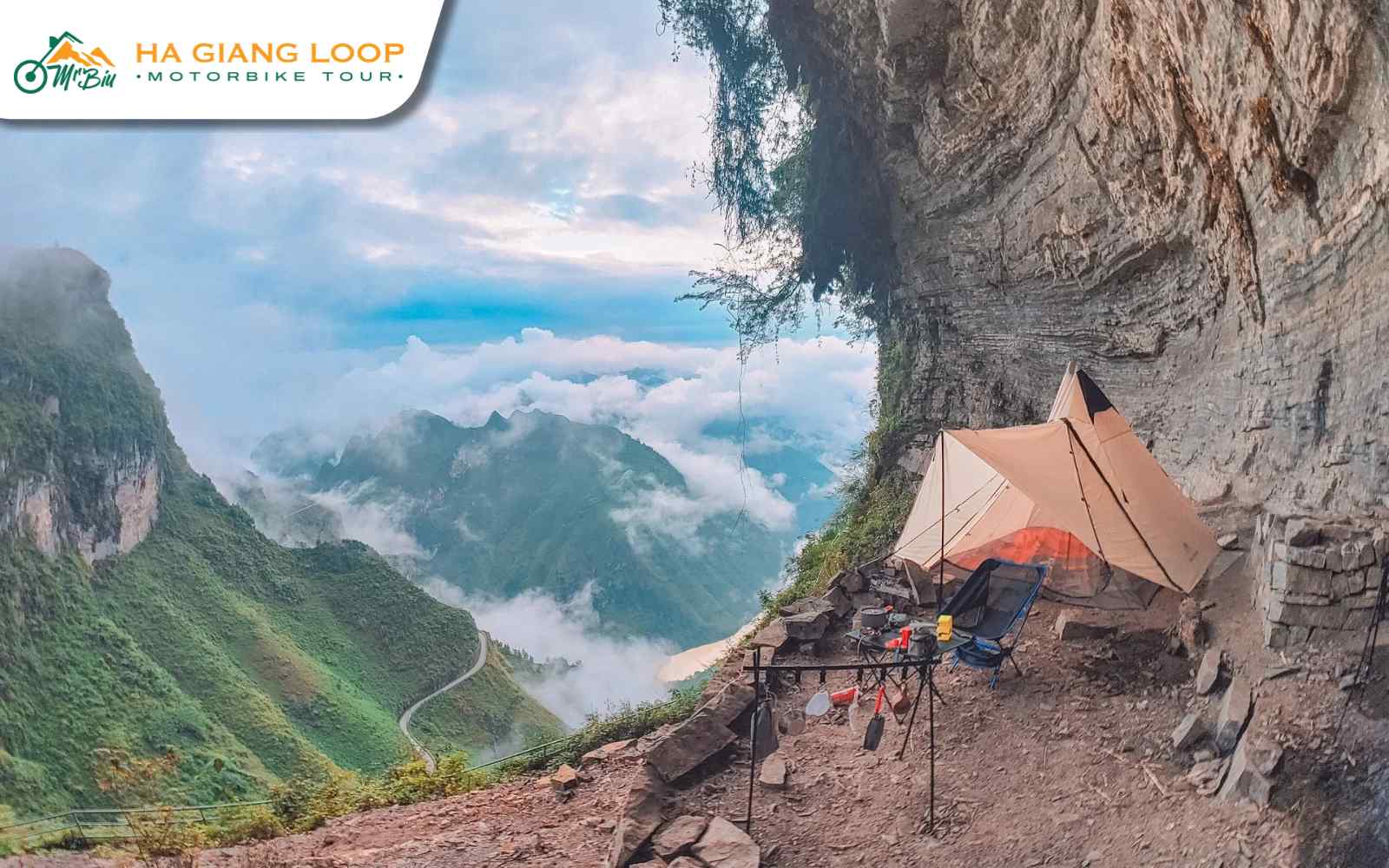
Travelers can sleep under the stars and immerse themselves in majestic scenery when camping in Ha Giang
What makes camping in Ha Giang Loop an unforgettable adventure
Unlike any ordinary road trip, camping in Ha Giang Loop
offers travelers a raw and immersive experience. You can sleep under the stars
with the vast sky above, and the karst mountains around to feel the freedom and
connection that few destinations offer. The loop’s winding roads, including the
famous Ha Giang Mountain Passes, lead to untouched villages, hidden
waterfalls, and sweeping valleys, making every stop a perfect chance to set up
camp and pause. This is more than a scenic ride; it’s a slow journey into
Northern Vietnam’s soul.
The rise of Ha Giang camping also comes from the desire to
disconnect from busy city life. Along the way, you may be welcomed by H’mong,
Tay, or Dao families with their customs, languages, and stories passed down for
generations. Whether joining a local market like Meo Vac market, helping
with a harvest, or simply sharing tea around a fire, these encounters turn your
journey into more than a scenic escape.
Scenic places to pitch your tent in the Ha Giang Loop
Camping in Ha Giang Loop unlocks some of the most
breathtaking campsites in Vietnam, offering unforgettable backdrops for your
adventure. Here are the top places to pitch your tent and fully embrace the Ha
Giang camping experience:
Dong Van plateau: Camping amid ancient rock formations
Description and Attractions: Part of the
UNESCO-designated Dong Van Karst Plateau Geopark, this region is one of the
most dramatic places for camping in the Ha Giang Loop. Its towering
limestone peaks, deep valleys, and layered rock cliffs create a surreal
landscape, perfect for travelers seeking adventure and serenity. Dong Van
plateau is also a place where geology meets the human spirit and where the
stars feel close enough to touch.
Ethnic Minorities: The plateau is home to several
ethnic groups, including the H’mong, Dao, Tay, and Lo Lo. Camping here offers
travelers a chance to observe daily life in remote villages, from women weaving
textiles to elders tending livestock and children walking to school in colorful
traditional dress.
History and Culture: The rock formations of Dong Van
date back over 400 million years, making the area a living archive of Earth’s
evolution. Equally timeless are the customs and festivals preserved by the
local people. The region has long been a cultural crossroads, where trade and
tradition blend seamlessly.
Cuisine: After a long day of exploring, tourists must
try Thang Co – a rich H’mong stew made with local herbs and meat, or sip on
maize wine by a campfire. These dishes satisfy your appetite and connect you to
the spirit of the land and its people.
Best Camping Areas: Top camping spots include the
terraced edges near Ma Le Village and the highland surroundings of Lung Cu
Flag Tower. These areas provide panoramic views and a peaceful atmosphere,
making them ideal for anyone looking to embrace wild camping in Ha Giang while
staying close to cultural landmarks.
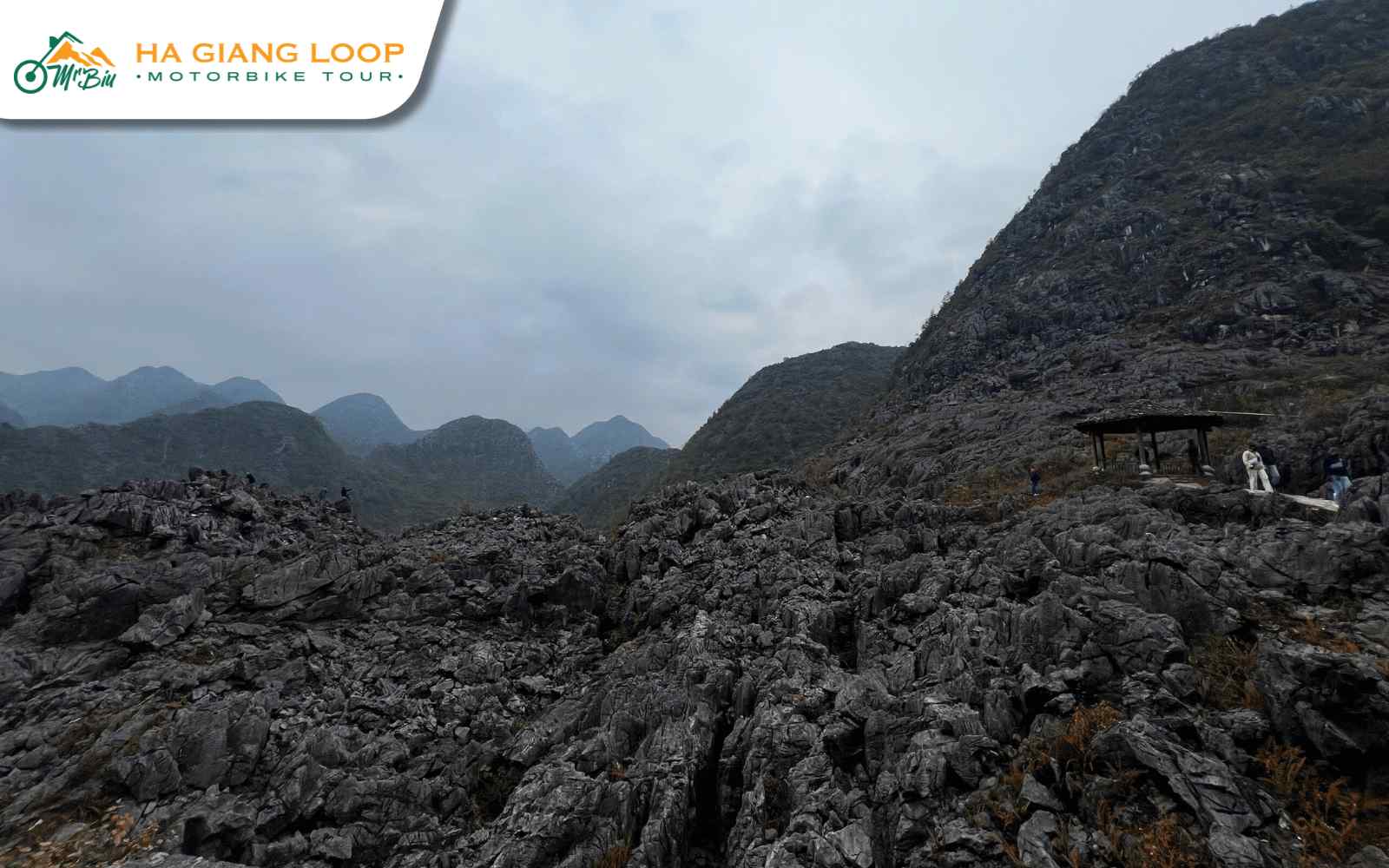
Dong Van Plateau offers a rare blend of wilderness and cultural heritage
Du Gia National Park: Deep in the forest, close to waterfalls
Natural highlights: Du Gia offers a lush contrast to
the rocky terrain of northern Vietnam, with dense forests, calm rivers, and
cascading waterfalls in Ha Giang perfect for swimming or simply
relaxing after a long ride.
Local communities: The Tay ethnic group lives in stilt
houses scattered across the valley, offering a glimpse into traditional lowland
life with slow rhythms, friendly smiles, and farming routines.
Heritage: Though more secluded, Du Gia reflects the
harmony between people and nature. Old customs blend naturally into the jungle
setting; conservation is part of daily life.
Local food to try: Enjoy freshly grilled river fish,
bamboo shoot soup, or sticky rice wrapped in banana leaves. These meals are
simple but nourishing, and usually shared with warmth.
Where to camp: Riverside areas near Du Gia Waterfall or
on terraced hills offer flat ground and a peaceful atmosphere. However, you
should ask local families for permission to camp near their land.
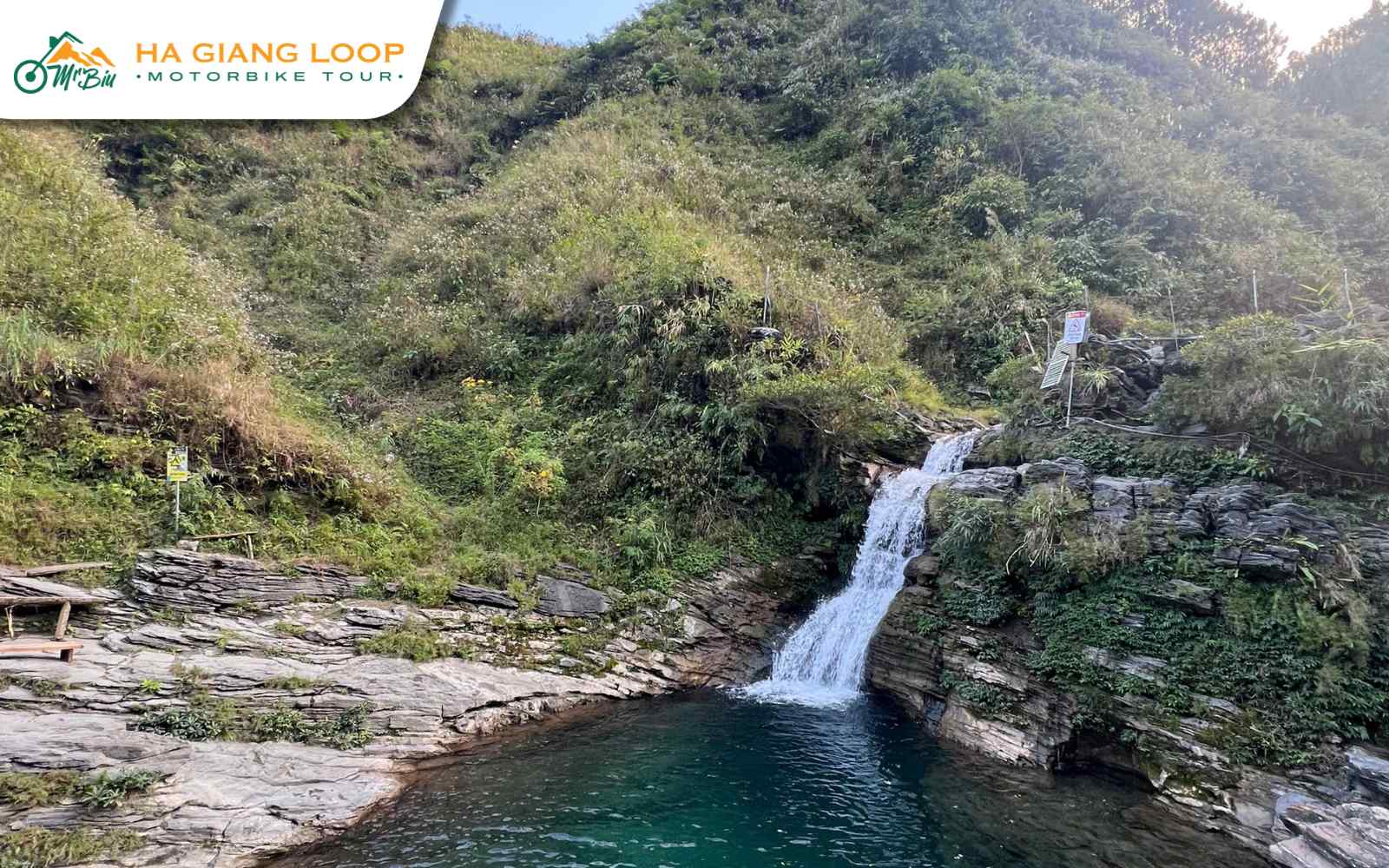
Where to camp in Ha Giang? The answer must be Du Gia National Park
Lung Cu tower: Sleep beneath Vietnam’s northernmost skies
Natural highlights: Lung Cu stands high above rolling
hills and valleys, with panoramic views into China and across northern Vietnam,
making it a thrilling place to spend the night under the stars.
Local communities: The Lo Lo and H’mong people live in
nearby villages, preserving their unique traditions through clothing and
language. When visiting, you can also explore handcrafted goods at the
vibrant Ha Giang markets.
Heritage: As Vietnam’s northernmost point, Lung Cu is
both a geographical and patriotic landmark, crowned with the towering national
flag symbolizing the unity and resilience of the Vietnamese nation.
Local food to try: Sample buckwheat cakes, dried
buffalo meat, and fermented corn wine. These foods are local favorites during
harvest festivals and cold evenings.
Where to camp: Grassy hills below the flag tower suit
tents, and breathtaking sunrises promise stunning views and cultural immersion.
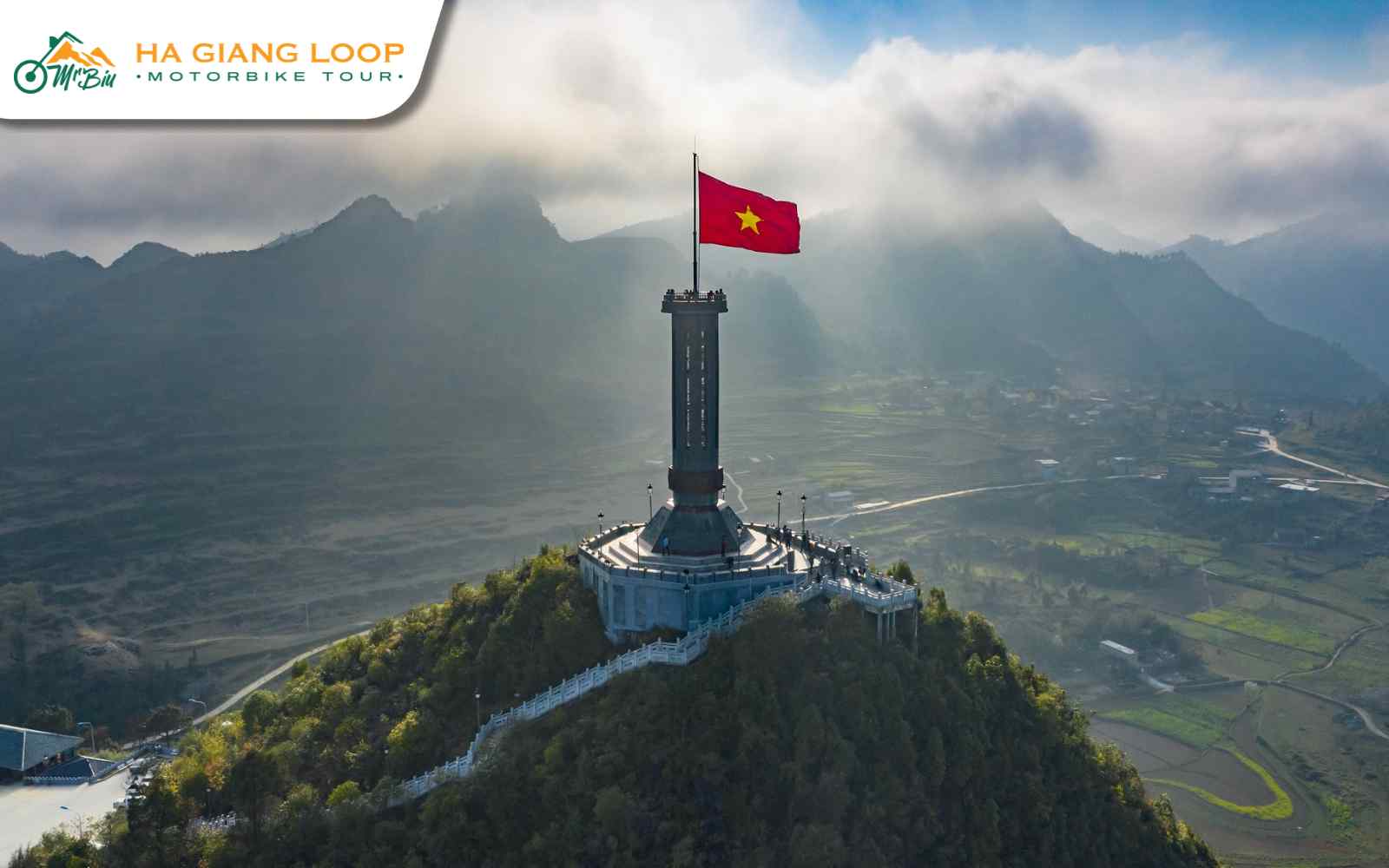
Admire the sky above and the beautiful scenery while camping in Lung Cu
Ma Pi Leng pass: Spend the night above deep mountain valleys
Natural highlights: Ma Pi Leng’s sheer cliffs and
twisting roads tower above the emerald Nho Que River, making it one of
Vietnam’s most breathtaking itineraries and a thrilling place to camp.
Local communities: The H’mong and Tay live in small
hamlets along the pass, continuing generations of mountain life with stone
houses, terraced fields, and goats grazing on cliffs.
Heritage: Carved in the 1960s, Ma Pi Leng Pass is
a historic feat of perseverance, symbolizing connection and endurance in
northern Vietnam. Due to its breathtaking views and dizzying heights, this
place is known as the “Sky Path.”
Local food to try: Corn wine, grilled meats, and herbal
tea are available in roadside stalls, perfect for a meal with a view.
Where to camp: Experienced campers can find narrow
ledges or spots along the pass to observe the breathtaking views and peaceful
settings.
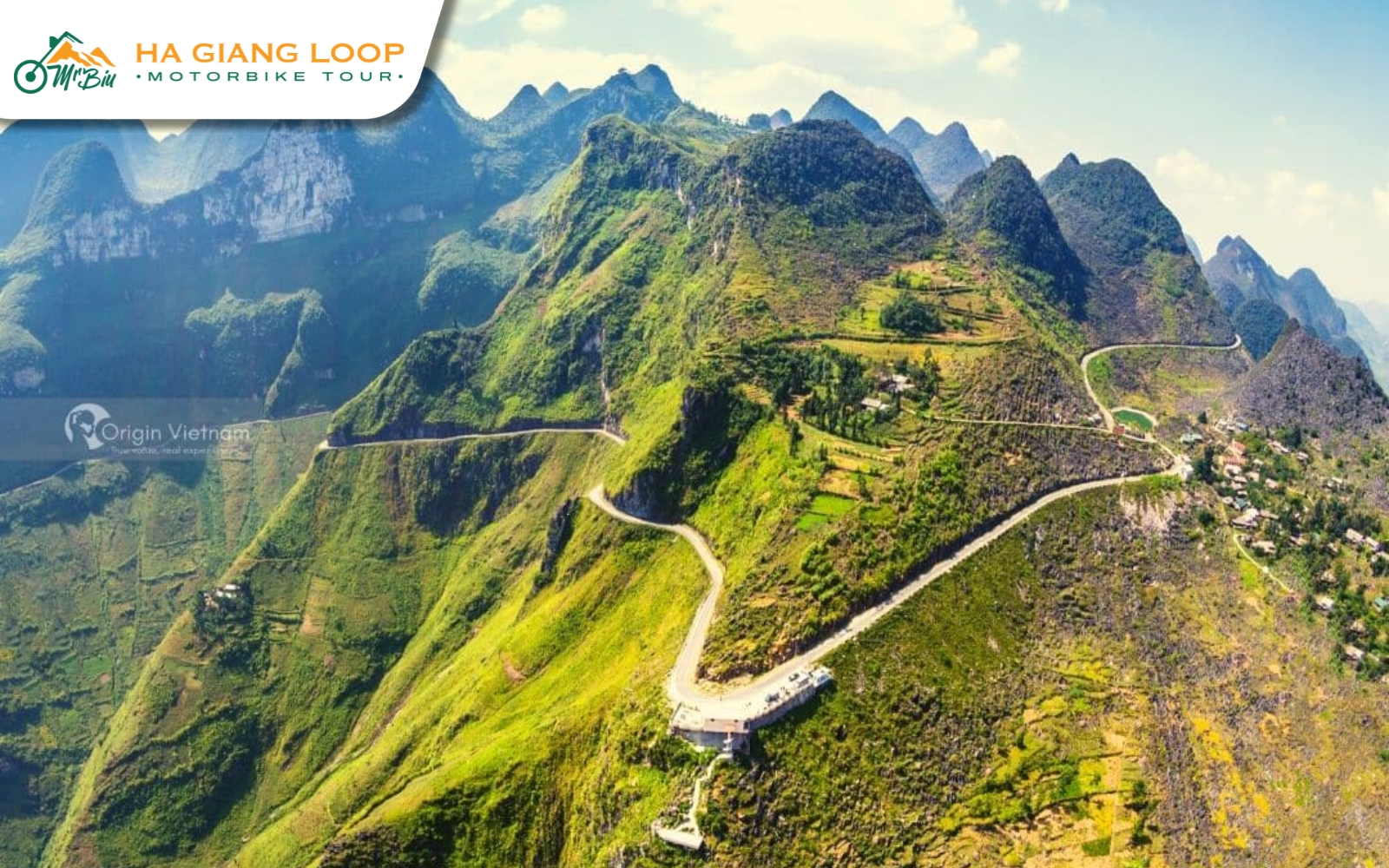
Travelers can overlook endless mountain ridges when camping in Ha Giang Loop
Thac Ba lake: Lakeside peace in a lesser-known spot
Natural highlights: Thac Ba Lake is one of Vietnam’s
largest artificial lakes, and it was formed by hydroelectric dam construction.
It is famous for its tranquil waters, scattered islands, and misty horizons,
which provide a pleasant, reflective atmosphere for travelers looking to
unwind. Though located near the Ha Giang Loop, it’s an underrated destination
in Ha Giang that offers serenity away from the crowds.
Local communities: The area is inhabited by the Dao and
Tay ethnic groups, having settled around the lake and established their lives
around fishing, farming, and ecotourism.
Heritage: Thac Ba has become essential to the region’s
identity since providing the landscape and livelihoods of local people through
fishing and tourism. It represents change and adaptation, woven into the
region’s cultural fabric.
Local food to try: Savor freshly caught fish grilled
over charcoal, wild herbs, and sticky rice – a simple yet satisfying local meal
often shared by the lakeside. These dishes reflect the abundance of the lake
and the culinary traditions of the Dao and Tay people.
Where to camp: Take a camping spot on the lake,
allowing travelers to enjoy boating and fishing by day and fall asleep under
starry skies by night.
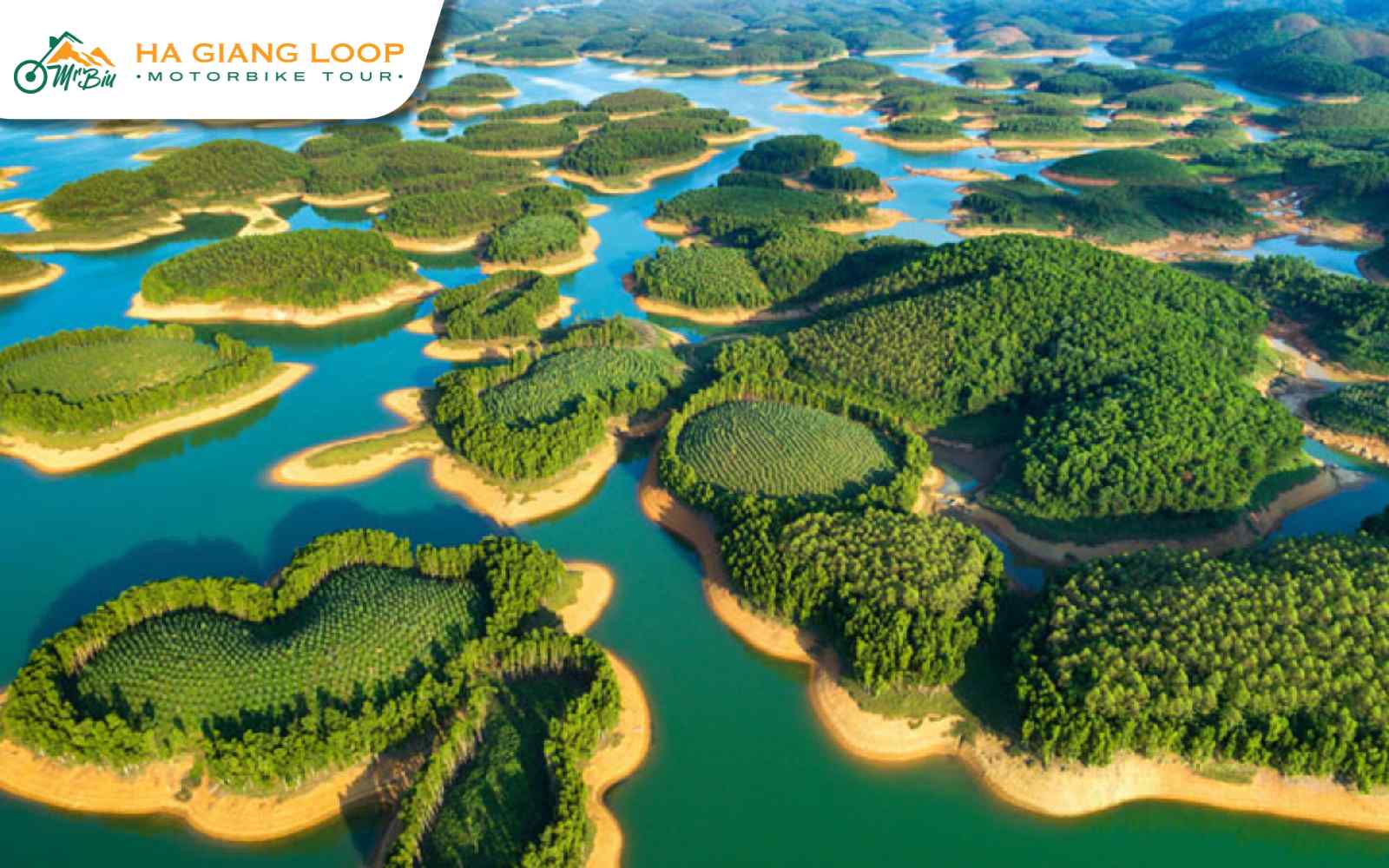
Thac Ba Lake is surrounded by glassy water and distant forested hills
Phuong Thien cave: A gentle retreat not far from town
Natural highlights: Surrounded by soft hills,
wildflowers, and shallow pools, Phuong Thien cave lies just outside Ha Giang
city, making it an easy escape into nature, one of the hidden gems in Ha
Giang.
Local communities: This picturesque area is mainly
inhabited by Tay and Dao groups, who have deep connections and are an integral
part of Ha Giang.
Heritage: While not widely known in tourist circles,
the caves are part of the local cultural rhythm, used by nearby families for
rest, reflection, and seasonal gatherings.
Local food to try: When visiting Phuong Thien,
travelers should try traditional foods such as sticky rice and grilled fish.
Where to camp: Clearings along the walking trail or
next to small streams offer flat, shaded areas perfect for first-time campers
or those ending the loop nearby.
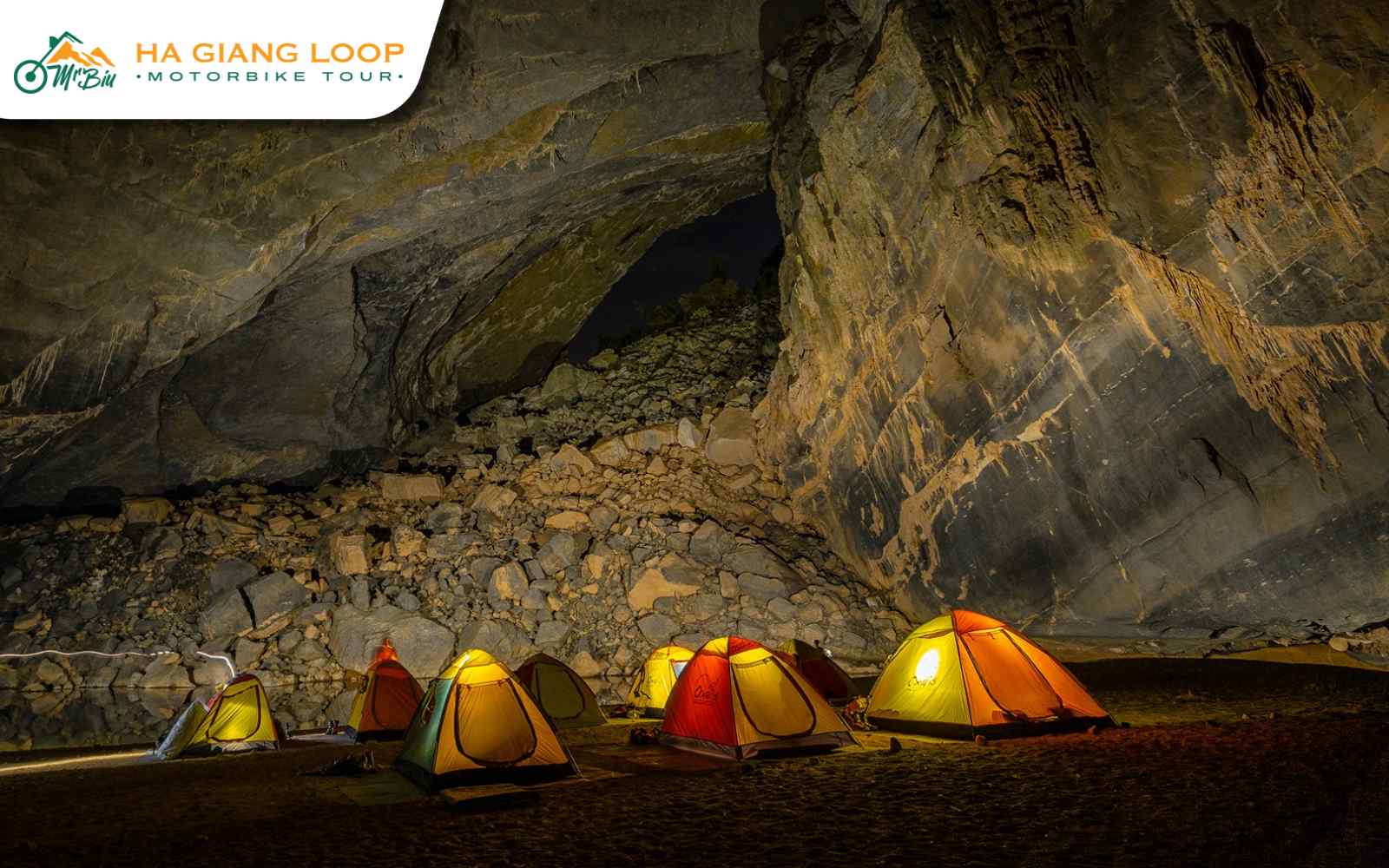
Experiencing camping in Phuong Thien cave is a must-try activity for first-time campers
When is the best time to go camping in Ha Giang?
Best seasons for camping: The best time for camping in
Ha Giang Loop is during the dry seasons (March – May, September –
November). These months offer the most stable weather, with mild temperatures,
clear skies, and minimal rainfall. They are ideal for those who love to pitch a
tent, hike, and enjoy panoramic views without the worry of getting soaked or
stuck in muddy trails.
Things to prepare: Mountain weather in Ha Giang can
change suddenly despite the dry season. Therefore, travelers should pack a
waterproof tent, warm layers, a reliable sleeping bag, and don’t forget to
check local weather forecasts before heading out to ensure a comfortable
camping experience.
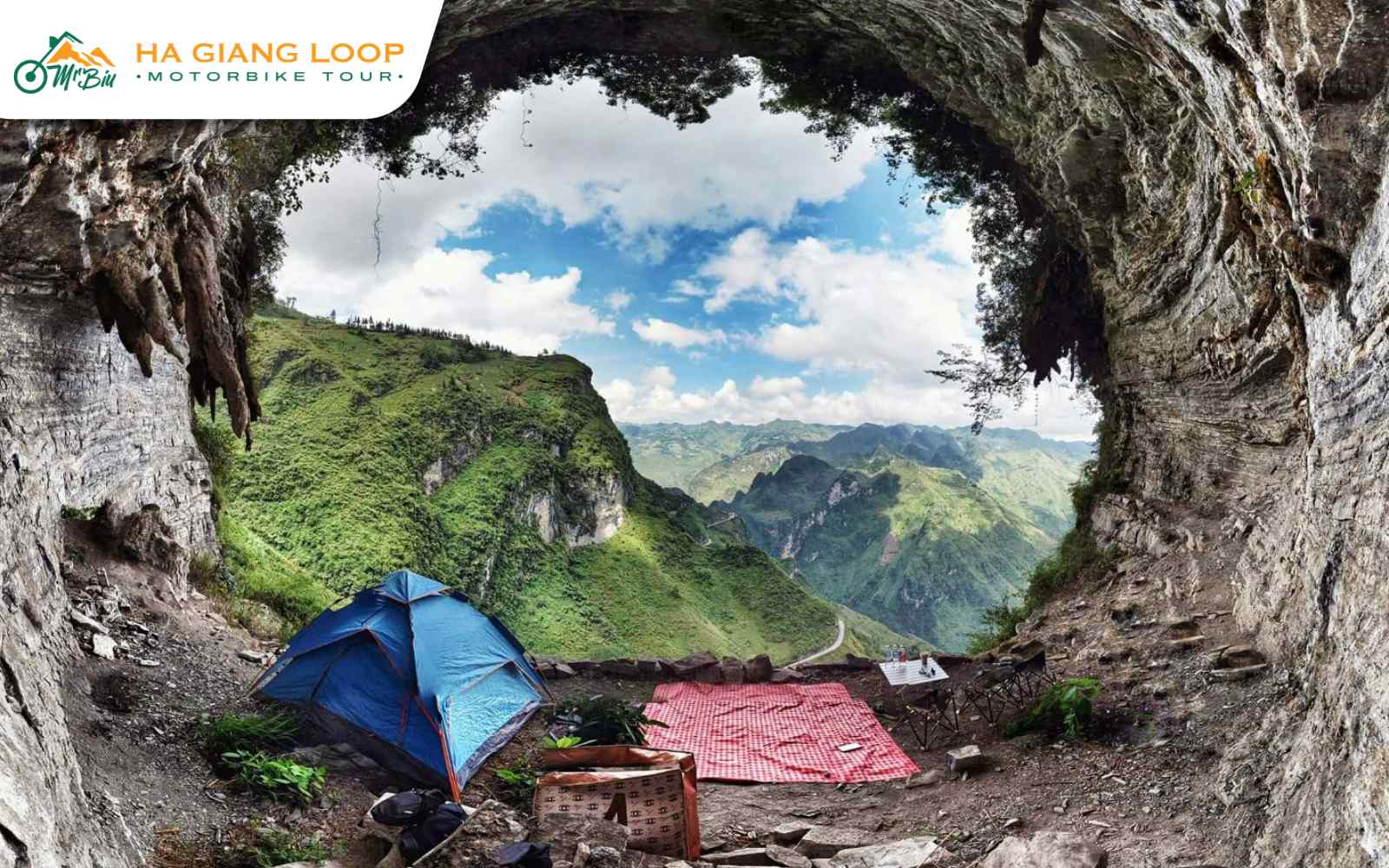
The ideal time to go camping in Ha Giang is the dry season
A beginner’s guide to camping in Ha Giang
Preparation is key if you’re new to camping in Ha Giang
Loop. Some items that should always be in your bag are a weatherproof tent,
warm sleeping bag, light food, water, rain gear, flashlight, and a basic first
aid kit. Always inform someone of your route, check the weather before
starting, and respect local customs to enjoy a safe and rewarding camping
experience.
What is camping in Ha Giang really like?
Daily activities: A typical day in Ha Giang Loop usually
starts with a simple yet energizing breakfast before you set out to explore the
stunning surroundings. You can trek through rice terraces, swim in natural
streams, or visit nearby ethnic villages to observe daily life and engage with
local culture. Many of these routes are part of the best Ha Giang trekking
trails, where each stop offers a new view, a quiet moment, or a meaningful
connection with the land.
Nature encounters: While camping in Ha Giang, tourists
can encounter vibrant wildlife like colorful butterflies, songbirds, or small
forest animals. The region is also rich in unique flora, such as wildflowers,
medicinal plants, and thick bamboo groves, which add to its natural charm.
However, you should always observe wildlife from a safe distance and avoid
disturbing the environment.
Evening experiences: Nights in Ha Giang are especially
memorable. With clear skies and minimal light pollution, the stars seem closer
and brighter than ever. Campfires become the heart of the experience, providing
warmth, space for reflection, and a chance to share stories with fellow
travelers. The only background sounds are the whisper of the wind and the
rustling of trees, making it a peaceful end to each day.
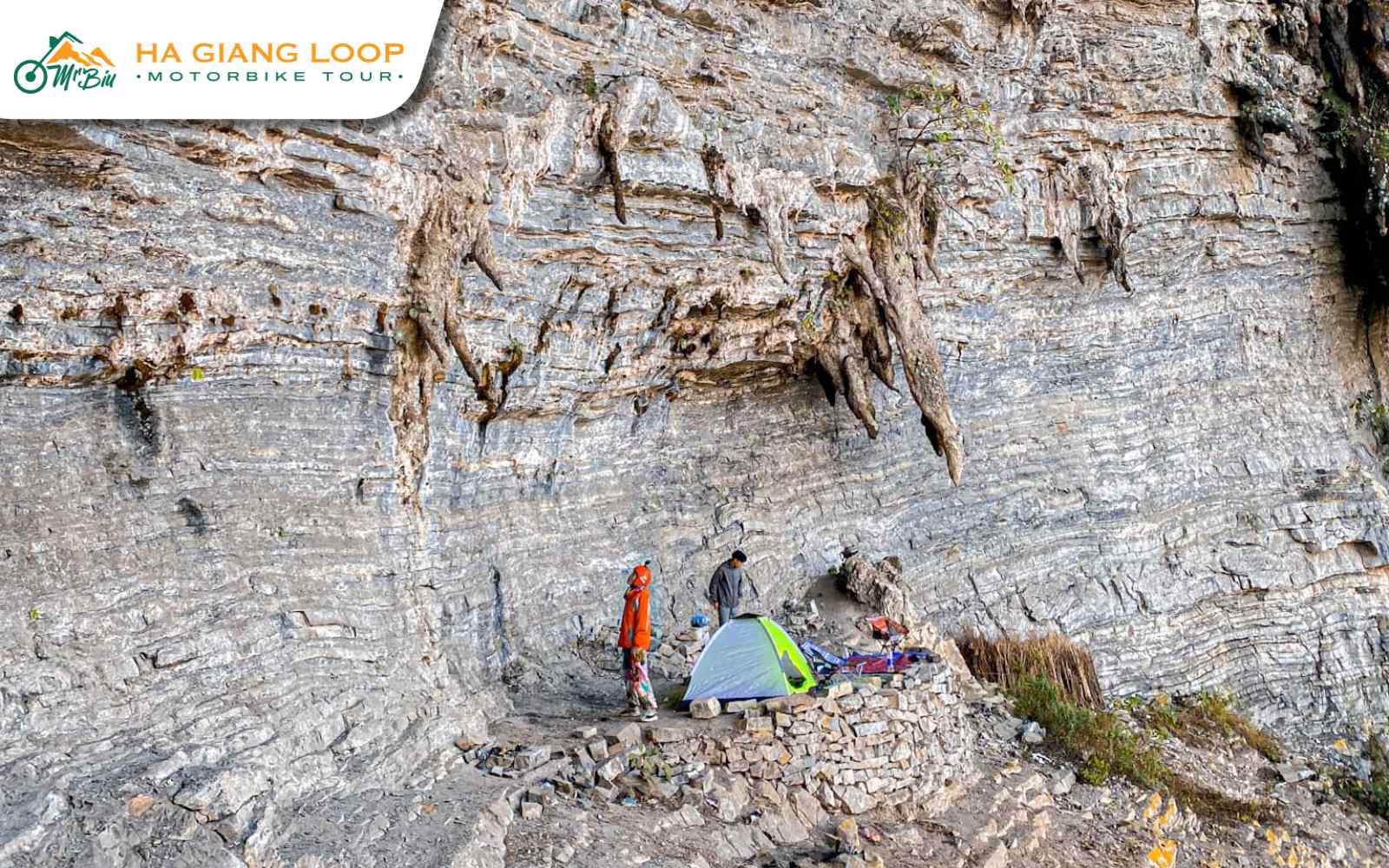
Visitors can admire the beautiful surrounding nature and gain a new perspective when camping in Ha Giang
How to respect culture when camping near ethnic villages
Interact with sensitivity: Visitors should always ask
for permission before taking photos of local people or their homes. Besides,
you can learn a few basic phrases in the local language, such as “Xin chao” or
“Cam on” to show respect. Be mindful of customs, dress modestly, and observe
how the community lives before engaging.
Leave no trace: When camping in Ha Giang, especially
near ethnic villages, protecting the natural and cultural environment is
crucial. Therefore, you should pack out all trash, avoid disturbing wildlife or
plants, and stick to established trails and campsites to minimize impact.
Support local culture: If invited, you can join local
activities like cooking, dancing, or craft-making. Always approach with genuine
interest and respect. You can also purchase local handmade products or food to
support the community.
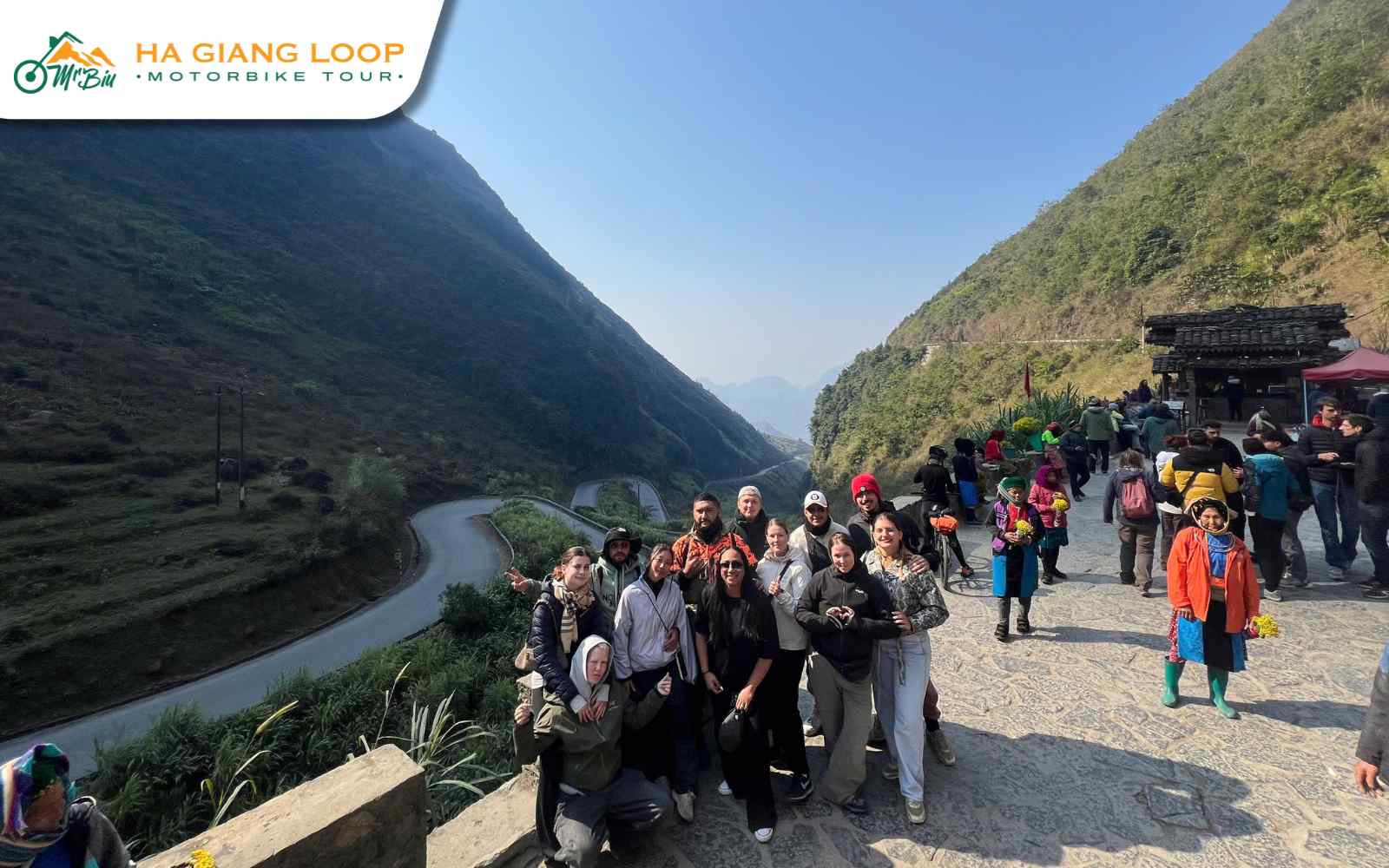
The best Ha Giang camping tips are to interact with
sensitivity, leave no trace, and support local culture
Witnessing the beauty of Ha Giang Loop with Mr. Biu Tour
If you want to explore the authentic beauty of Ha Giang, let
Mr. Biu Tour Ha Giang take you beyond the postcards and straight into the heart
of the Loop. Specializing in Ha Giang easy rider motorbike tour, we don’t
just show you the view — we ride with you through cloud-kissed mountain
passess, experience the magic of cloud hunting in Ha Giang, camp under
starlit skies, and bring you face-to-face with the rich culture of local ethnic
communities.
Camping in Ha Giang Loop is more than a journey through
the mountains. It’s a chance to reconnect with nature and discover the
authentic beauty of northern Vietnam. Though you choose to sleep under the
stars on a mountain ridge or beside a quiet waterfall, Mr. Biu have it all.
Contact us now and let us handle the details of Ha Giang motorbike and
tour so you can live the adventure!